Recruitment agency software does four jobs: an applicant tracking system (ATS) that holds candidates and client accounts, sourcing tools such as job boards and resume databases, outreach to candidates, and screening or ranking. An agency with an ATS and a database subscription has the first two covered. On mid-senior mandates, the hours go into the last two.
This guide maps each layer to a real mandate funnel, compares what the common tools say they do (checked on vendor websites on 8 November 2026), lists what to ask a vendor before you sign, and shows where staffing agency software built for mid-senior sourcing sits next to your ATS.
What does recruitment agency software cover?
Think of it as four layers that hand work to each other. Vendors bundle them differently, so a product called an "ATS" may include some sourcing, and a sourcing tool may keep its own pipeline. What matters is which layer does the work on your desk today and which one only records it.
| Layer | What it does | Examples (from vendor sites) | Where senior mandates strain it |
|---|---|---|---|
| ATS and client management | Candidate records, pipelines per client, submissions, reports | Zoho Recruit Staffing Agency Edition: resume parsing, multi-board job posting, client-ready formatted resumes. Ceipal: ATS combined with a vendor management system and AI matching | It records calls and submissions; it doesn't make them |
| Sourcing | Finding people for the brief | Job boards, Naukri Resdex, LinkedIn Recruiter, your own database | Senior candidates are employed and rarely apply; database profiles go stale |
| Outreach | Contacting candidates and confirming interest | Email and SMS inside the ATS, plus consultants' own phones and WhatsApp | Every profile needs a conversation before it counts |
| Screening and ranking | Deciding who to call first and who to submit | AI match scores in some ATS suites, assessments, consultant judgement | CTC fit, notice period and intent to join rarely sit in a profile |
The top Google results for this search in India (checked 8 November 2026) are mostly lists of 10 to 24 tools ranked on features, and several are written for the US market. They rarely ask the question an Indian delivery head cares about: which layer is eating the consultant's day?
Where a senior mandate loses its hours
Take one of Hire22's published funnels, a ServiceNow Developer search: 165 candidates found, 74 screened, 18 interview-ready, 2 hired by the client. Read it as software layers. The 165 is sourcing. Getting from 165 to 74 is outreach. Getting from 74 to 18 is screening and ranking. The ATS logs all of it.
On a manual desk, that middle stretch is where the time goes. Each of those 165 profiles means a call or message to check that the person is open to a move, that the CTC is in range and that the notice period works for the client. Plenty of them won't pick up the first time.
That's why a better ATS often disappoints on senior work. It makes the pipeline tidier and the client reports faster, which clients do notice. But the slowest step happens before anyone is entered as a submission, and an ATS has nothing to say about it unless it also runs the outreach.
Which layer should an Indian agency buy first?
Buy for the step that breaks most often on your desk, and use the symptoms to find it.
- Clients ask for status updates you can't produce, or two consultants submit the same candidate to one client: fix the ATS first.
- The ATS is clean, but consultants spend most of the day dialling and chasing replies: the gap is outreach.
- Your database keeps returning the same names for every mandate in a function: the gap is sourcing reach.
- Shortlists go to clients and come back with "not relevant" or "too expensive": the gap is screening on CTC, notice period and intent.
The type of business matters too. A contract staffing firm that runs payroll for deployed staff needs timesheets, invoicing and vendor management, and Ceipal, for one, sells workforce and vendor management next to its ATS. A permanent-placement agency doing Director and VP mandates needs much less of that and far more reach into people who aren't job hunting.
What to ask a vendor before you sign
Demos show the best mandate. Ask these questions in writing, so the answers end up in the contract or the order form.
- How is it priced? Zoho Recruit's staffing plans, for example, are priced per user per month, some billed annually, with GST added on top. Count every consultant and researcher who will log notes, not just the senior team.
- Can we send a client a CV without the candidate's contact details? Clients going around the agency to the candidate is a real fee risk. Zoho lists formatted resumes for this; check how any tool handles it.
- Where is candidate data stored, and how do we handle a deletion request? CVs are personal data, and the Digital Personal Data Protection Act, 2023 (Gazette of India, 11 August 2023) governs how digital personal data is processed in India. Get the vendor's answer in writing and have your own adviser check it.
- Can we export everything if we leave? Ask for the format, including notes and attachments.
- Does outreach run inside the tool? If WhatsApp and calls still happen on consultants' phones, the replies never reach the record.
How Hire22 fits next to your ATS
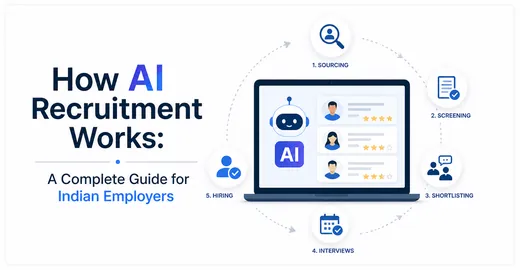
Hire22 covers the sourcing, outreach and ranking layers for mid and senior roles, and your ATS stays the system of record. You post the mandate as a JobCoNCT (one JobCoNCT is one role). Hunter AI searches the Hire22 candidate database and the web, including passive candidates. CoNCT AI contacts them by SMS, WhatsApp, email and AI voice calls and confirms interest, so your consultants don't make those first calls. JoinX AI then ranks interested candidates on 200+ parameters, including CTC fit, notice period and intent to join. The interview-ready shortlist typically arrives within 22 hours of posting, and candidates' details stay hidden until they accept. Hire22 doesn't interview or hire; your consultants pitch, submit and close. Packages start with a ₹2,999 + GST trial (see pricing). It is not designed for volume fresher or blue-collar staffing, and it has no client billing, so keep your ATS.
Can one tool cover all four layers?
Some suites say they do. Zoho's staffing edition includes Zia, its AI assistant, for sourcing, screening and match scores, and Ceipal pitches AI that sources, matches and engages candidates. Whether that holds for a senior mandate is something to test, not take from the brochure.
The fairest trial uses a mandate you've already closed. Run the same brief through the tool and count how many credible candidates it finds who weren't already in your database, and how many of them confirm interest. If the answer is close to zero, you've bought a better filing cabinet. That's fine if filing was the problem.
Have a mid-senior mandate open this week? Post it as a JobCoNCT and compare the ranked shortlist with what your database returns for the same brief.
Related reading: when to use a headhunters alternative for senior hiring, how to build a recruitment tech stack with ATS and AI sourcing, and how retained and contingency search fees are structured in India.
What is the difference between an ATS and a recruitment CRM?
An ATS tracks candidates through a specific job's pipeline, while a recruitment CRM tracks relationships over time, with candidates you may place later and with client contacts. Agency editions of most ATS products now include both, so check that client accounts are covered before buying a separate CRM.
Is staffing software the same as recruitment agency software?
Mostly, though contract staffing adds work that permanent placement doesn't: timesheets, payroll, invoicing and vendor management for deployed staff. A firm doing Director and VP placements can skip most of those modules and spend the budget on sourcing and outreach.
Do executive search firms need the same software as volume agencies?
No. A search firm works fewer mandates in more depth, so research notes, confidentiality controls and reach beyond the partners' own network matter more than job board posting. Volume features such as bulk resume parsing matter far less on a CXO brief.
Can AI tools replace consultants at a recruitment agency?
No. AI can take over sourcing, first contact and ranking, but the client relationship, the pitch to a senior candidate, offer negotiation and handling a counter-offer still need a consultant. Those steps decide whether the fee gets paid.
Should we migrate our old candidate database when we switch tools?
Yes, import it, but treat old records as leads, not live candidates. People change employers, numbers and pay bands, so a profile from two years ago needs fresh contact before it goes on any shortlist.
Do candidates pay anything to receive a JobCoNCT from Hire22?
No, Hire22 is free for candidates. They get the JobCoNCT on SMS, WhatsApp or email and apply through its link; new users register, and registered users can accept with one click and upload a resume.