Hiring the wrong leader is rarely a one-time cost. A misaligned CTO can set the wrong technical direction for years. A mismatched sales leader can lose a team's trust before anyone above them notices something is wrong. Leadership hiring mistakes compound in a way an individual contributor's mistake does not, because leaders shape the people and decisions around them.
Yet most leadership searches still run on the same process as any other hire: post the role, collect resumes, run a few interviews, make an offer. This guide covers the specific mistakes that derail leadership hires, the structural challenges that make leadership hiring harder than other hiring, and the practices organizations use to get it right more consistently.
Why Leadership Hiring Is Different From Other Hiring
Three things make leadership roles harder to hire for than individual contributor roles.
First, the candidate pool is smaller and mostly passive. Someone already running a function well is rarely browsing job boards. Reaching them requires active sourcing, not a job posting and a wait.
Second, the evaluation criteria are harder to measure. Technical skill can be tested. Judgment, influence, and the ability to build a strong team over eighteen months cannot be assessed in a single interview, which is exactly why so many leadership hires still get made on gut feel and resume pedigree instead.
Third, the cost of a wrong call is higher and slower to surface. A bad individual-contributor hire usually becomes visible within a quarter. A bad leadership hire can look fine for a year while quietly damaging retention, morale, and execution before the problem is obvious enough to act on.
The Most Common Leadership Hiring Mistakes
Mistake 1: Hiring for Technical Skill Over Leadership Capability
It is tempting to promote or hire the strongest individual performer into a leadership seat, on the assumption that competence in the work translates into competence leading people who do the work. It often does not. A candidate can be technically excellent and still lack the emotional intelligence, delegation instinct, or conflict-handling skill a leadership role demands.
This shows up most often in technical leadership hires, where a strong individual contributor is promoted or hired into a management role and struggles to delegate, give feedback, or build trust with a team they used to be a peer to.
How to avoid it: Weight behavioral interviews and structured leadership assessments as heavily as technical evaluation. Ask candidates to walk through a specific instance of managing conflict, delegating a project they cared about, or giving difficult feedback, and probe for what they actually did, not what they believe in principle.
Mistake 2: Skipping Cultural and Working-Style Fit
A leader who does not fit how the organization actually works, not just what it claims to value on a careers page, creates friction that ripples through their entire team. A leader used to a command-and-control style dropped into a consensus-driven culture, or the reverse, tends to clash regardless of how capable they are individually.
How to avoid it: Define the organization's actual working norms, not aspirational ones, before the search starts. Use scenario-based interview questions that reveal how a candidate operates day to day, and involve the team the leader will inherit in at least one stage of the process.
Mistake 3: Rushing a Search That Needed Rigor
Leadership vacancies create visible pressure. Projects stall, decisions queue up, and the instinct is to close the role as fast as possible. That urgency is exactly when hiring teams start skipping steps: fewer interview rounds, lighter reference checks, less scrutiny of gaps in a candidate's story.
How to avoid it: Treat the timeline for a leadership search as a separate decision from the pressure to fill the seat. A structured process with multiple rounds and real reference checks takes longer than a rushed one, but a bad leadership hire that needs to be undone takes far longer and costs more in disruption than the extra weeks of diligence would have.
Mistake 4: Not Probing Red Flags Properly
Vague answers about past leadership experience, a pattern of blaming previous employers or teams for failures, or an inability to describe a specific mistake and what was learned from it are all signals worth pausing on. These are easy to miss when an interview is running on a tight schedule or when a candidate otherwise interviews well.
How to avoid it: Ask direct, specific questions: "Tell me about a time a project under your leadership failed. What was your role in that failure, and what did you change afterward?" Candidates who cannot answer with specificity, or who answer only by describing what others did wrong, deserve closer scrutiny. Backchannel references, speaking to people who worked for or alongside the candidate rather than only the references they provide, catch far more than a standard reference call.
Mistake 5: Leaving the Role Definition Vague
A leadership job description that lists broad themes instead of specific outcomes attracts the wrong candidates and gives a new hire no clear bar to measure themselves against. "Drive growth" and "build a high-performing team" are not job requirements, they are aspirations any candidate can claim to meet in an interview.
How to avoid it: Write the role around what success looks like in the first 90 days, the first year, and beyond: specific deliverables, team or budget scope, and the decisions the person will own. This does double duty, it sharpens the search and gives the eventual hire a concrete standard from day one.
Mistake 6: Letting One Person Make the Final Call Alone
A single hiring manager's read on a candidate is a single, biased data point, no matter how experienced that manager is. Leadership hires made by one person without structured input from peers, the team being inherited, or a skip-level tend to reflect that one person's blind spots more than the organization's actual needs.
How to avoid it: Build a small panel with different vantage points, a peer leader, someone from the team the hire will manage, and a more senior stakeholder, and require each to score the candidate against the same defined criteria before discussing impressions as a group. Structured, independent scoring before group discussion reduces the anchoring effect of whoever speaks first.
Leadership Hiring Challenges Beyond the Obvious Mistakes
Even a well-run process runs into structural problems that are harder to fix with a checklist.
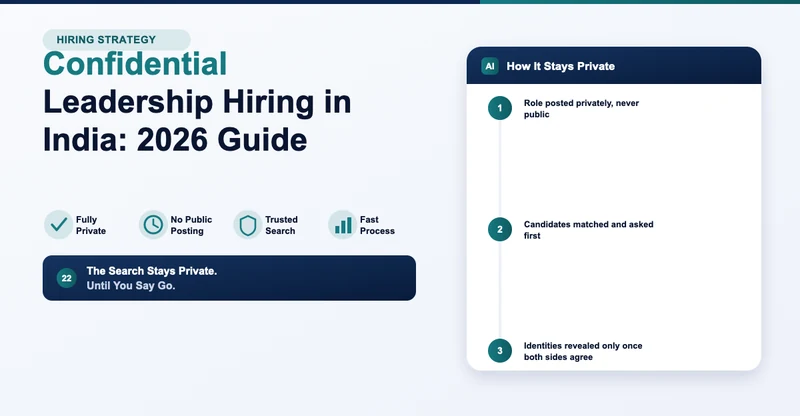
- Confidentiality. Most strong leadership candidates are currently employed and cannot risk their search becoming known before they are ready to move. Searches that require candidates to apply openly or reveal their identity early lose access to a large share of the best people.
- Counteroffers and competing processes. Senior candidates are often in more than one conversation at once, and a slow internal process loses good candidates to whoever moves faster with a comparable offer.
- Stakeholder alignment. Leadership hires usually need buy-in from multiple stakeholders with different priorities, a board member who wants pedigree, a CEO who wants cultural fit, a peer who wants someone easy to work with. Getting these groups to agree on a success profile before the search starts, rather than arguing over individual candidates later, prevents a lot of wasted cycles.
- Measuring intangibles. Judgment, resilience under pressure, and the ability to build trust quickly are the traits that matter most at the leadership level and the hardest to assess in a handful of interviews.
- Small, mostly invisible candidate pools. The right person for a leadership seat is frequently not looking, not on a job board, and not reachable through a standard posting.
Leadership Hiring Practices That Actually Work
Organizations that consistently hire leadership well tend to share a handful of practices, regardless of industry.
- A written success profile before the search starts. Specific outcomes and decision rights, agreed by every stakeholder, before the first candidate is reviewed.
- Structured interviews with consistent criteria. The same core questions and scoring rubric across candidates, so comparisons are based on evidence rather than who interviewed better on the day.
- Scenario and working-session assessments. Having a candidate work through a real problem the role will face, rather than relying only on conversation about hypothetical situations.
- Backchannel reference checks. Conversations with people who worked with the candidate but were not nominated as references.
- A defined, realistic timeline. Fast enough to hold on to strong candidates, slow enough not to skip diligence steps that matter.
- Sourcing that reaches passive candidates. Since most of the best leadership candidates are not actively applying, relying only on inbound applications narrows the pool to people willing to make the first move.
Where AI-Assisted Sourcing Fits Into Leadership Hiring
The confidentiality and passive-candidate problems above are exactly where platforms like Hire22.ai change the mechanics of a leadership search rather than just speeding up the paperwork. Hunter AI sources candidates from more than 40 platforms, which matters specifically because most capable leaders are not browsing job boards. Anonymous hiring keeps both the employer's identity and the candidate's identity hidden until the candidate accepts the JobCoNCT, which lets a company run a confidential leadership search without the role becoming known internally or externally before it is ready to be.
The JoinX Score then ranks responding candidates on skills fit, experience, CTC fit, location, notice period, and joining intent, giving a hiring panel a structured starting point instead of an unsorted stack of resumes to argue over. None of this replaces the interview rounds, reference checks, or stakeholder alignment described above, it simply gets a more relevant, better-matched set of candidates in front of the people making that decision, usually within 22 hours of posting the role. Read more about how this applies to senior and executive searches on the executive hiring page and the anonymous hiring page, or see how it compares across functions in this guide to CXO hiring platforms.
A Practical Leadership Hiring Checklist
- Written success profile agreed by all stakeholders before sourcing starts
- Sourcing plan that reaches passive candidates, not just inbound applicants
- Structured interview questions and a shared scoring rubric
- At least one scenario-based or working-session assessment
- Backchannel references in addition to candidate-provided ones
- A defined timeline with no shortcuts on diligence steps
- A multi-stakeholder panel with independent scoring before group discussion
What are the most common leadership hiring mistakes?
The most frequent mistakes are hiring for technical skill over leadership capability, ignoring cultural and working-style fit, rushing a search that needed more rigor, missing red flags in interviews, leaving the role definition too vague, and letting one person make the final call without structured input from others.
What makes leadership hiring more challenging than other hiring?
Three structural issues: the best candidates are usually passive and not applying anywhere, the traits that matter most, judgment, influence, resilience, are difficult to assess in a handful of interviews, and the cost of a wrong hire surfaces slowly, often taking a year to become fully visible.
What hiring practices improve leadership hiring outcomes?
A written success profile agreed before the search starts, structured interviews with a shared scoring rubric, scenario-based assessments, backchannel reference checks, a realistic but defined timeline, and sourcing that reaches passive candidates rather than relying only on inbound applications.
How do I assess leadership skills during an interview?
Use behavioral questions anchored to specific past situations rather than hypothetical ones. Ask candidates to describe a time they managed conflict, delegated something they cared about, or led through a failure, and probe for specifics rather than general philosophy.
What is the biggest red flag in a leadership hiring interview?
Vague or evasive answers about past leadership experience, and a pattern of blaming previous employers or teams rather than taking accountability for outcomes, are the clearest warning signs.
Should I prioritize internal promotions over external leadership hires?
Both have a place. Internal promotion works well when the person has already demonstrated leadership behaviors and understands the culture, while an external hire brings outside perspective and experience the organization may not have internally. The right call depends on whether the role needs continuity or a change in direction.
How long should a leadership hiring process take?
Enough time for a structured process with multiple interview rounds and real reference checks, without so much delay that strong candidates accept a competing offer elsewhere. Most organizations find a middle ground that runs to several months for senior roles, with sourcing time reduced when the search reaches passive candidates directly rather than waiting on inbound applications.
How does confidentiality affect leadership searches?
Many of the strongest leadership candidates are currently employed and cannot risk their search becoming known before they are ready. Searches that require candidates to apply openly or reveal their identity early lose access to a meaningful share of the best available people, which is why anonymous hiring processes tend to surface a different, often stronger, candidate pool.